
For much of the past two centuries, machines have changed the way people earn a living. They have taken over physically demanding tasks, made production faster and allowed fewer workers to accomplish what once required entire teams. The consequences have been visible in factories, farms, transport systems and almost every other part of the economy.
Artificial intelligence is extending that transformation into a less familiar setting.
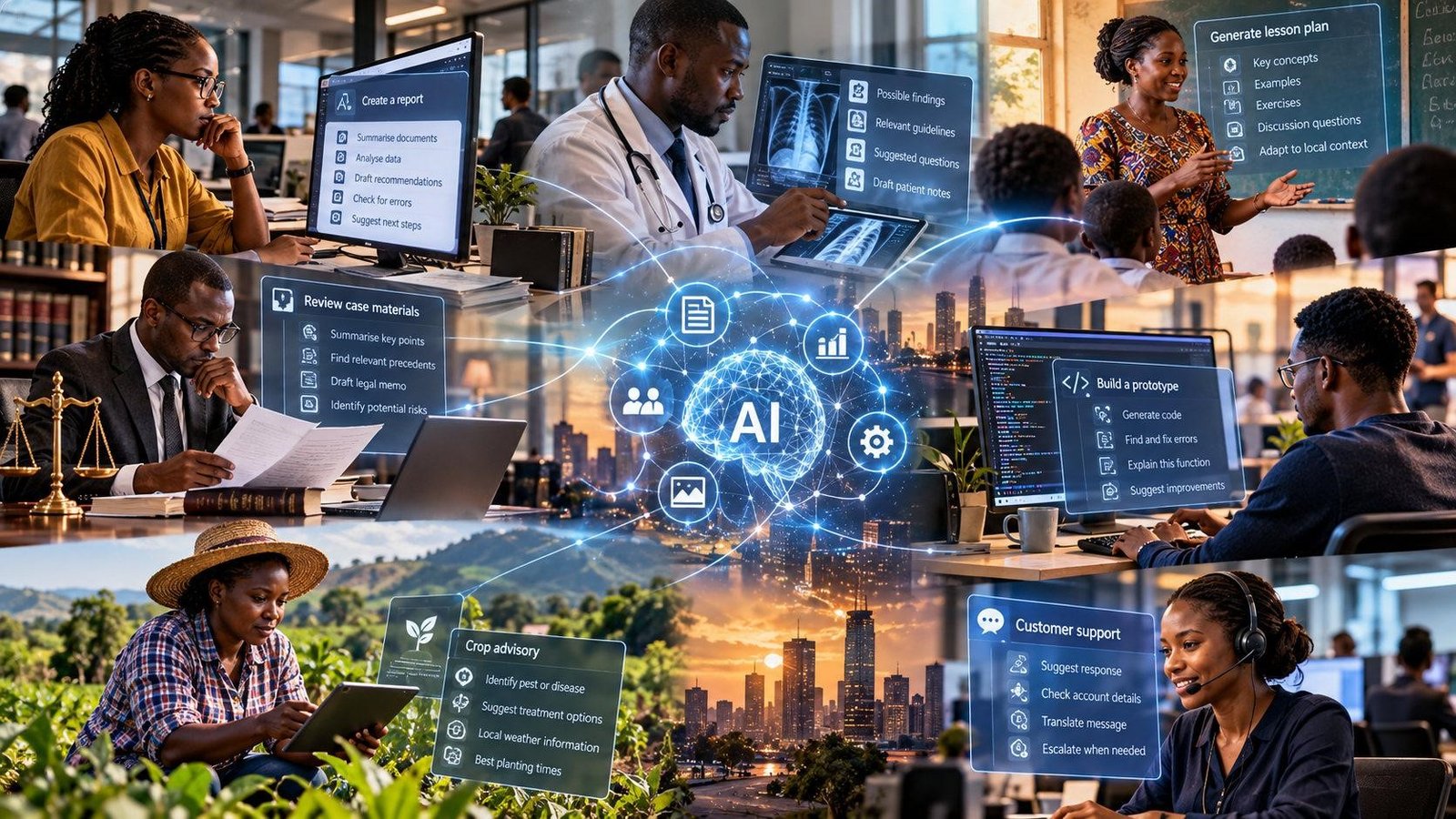
A lawyer can now use software to prepare an initial draft of a document that might previously have occupied several hours. A teacher can develop lesson materials more quickly, while a programmer can ask a computer to suggest code rather than write every instruction manually. In customer service, systems can analyse questions and recommend responses before an employee has finished reading a complaint.
These developments are already changing working routines, although their wider consequences are far from settled. Some employees are becoming more productive, while others are beginning to encounter changes in the tasks their employers expect them to perform. In certain occupations, even the way new workers enter the profession may be changing.
The arrival of generative artificial intelligence has naturally produced considerable anxiety about employment. Predictions range from the disappearance of entire professions to expectations of almost unlimited productivity and prosperity. Neither extreme adequately reflects what is happening.
The more interesting story lies in the ordinary workplace, where businesses are discovering which activities the technology can perform reliably, which still require human expertise and whether new ways of working actually deliver better results.
It is a familiar process in the history of industrial revolutions, although this time the machinery is reaching into activities that earlier generations considered distinctly human.
Work Has Always Changed With Machinery
When mechanised textile production spread during the First Industrial Revolution, it transformed occupations that had developed around manual spinning and weaving. Machines could perform certain operations more quickly and at greater scale, allowing manufacturers to reorganise production around factories.
The changes were not welcomed by everyone. Skilled workers whose livelihoods depended upon established methods faced competition from machinery and new forms of employment. Some lost their positions, while others entered expanding industries that offered different opportunities and working conditions.
The Second Industrial Revolution carried mechanisation further. Electricity, improved machinery and assembly-line production changed how factories operated, allowing manufacturers to divide complicated processes into smaller, repeatable activities.
An automobile that might once have required extensive work by skilled craftsmen could be assembled through an organised sequence of operations performed by workers and machinery. Production increased, costs fell and entirely new industries developed around transport, manufacturing and related services.
But industrial progress was never simply a matter of machines replacing people.
As manufacturing expanded, demand grew for engineers, technicians, administrators, transport workers and many other occupations. New products created markets that had scarcely existed before, while rising productivity helped make goods more affordable.
The benefits, however, were not equally shared. Workers whose skills became less valuable could experience considerable hardship even while the industries employing new technologies prospered.
The Third Industrial Revolution brought similar changes into offices and administrative work.
Computers gradually assumed tasks involving calculations, record-keeping, payroll processing and the management of information. Bank employees who once worked with physical ledgers moved to electronic systems, while secretaries and administrative staff adopted word processors, spreadsheets and databases.
Eventually, the internet transformed communication, commerce and the organisation of business. Some clerical tasks disappeared or became far less labour-intensive, but new occupations emerged in software development, digital communications, information technology and online services.
These experiences reveal something important about technological change. An occupation is rarely a single activity. It consists of many smaller tasks, some of which are easier to automate than others.
A bank does not cease to need employees simply because software can calculate interest. The work changes, and employees may be required to concentrate on customer relationships, compliance, lending decisions and problems that automated systems cannot adequately resolve.
Artificial intelligence is following a related pattern, but with a significant difference.
Earlier computer systems were particularly effective at processing information according to established procedures. Modern AI can increasingly assist with activities for which the correct procedure is not always easy to describe in advance.
Writing, interpreting documents, analysing information and proposing solutions are now becoming part of the discussion about automation.
That brings the industrial revolution into occupations that have traditionally depended upon education, professional training and accumulated experience.
Artificial Intelligence Is Entering Ordinary Work
The effects of artificial intelligence are easiest to understand through the tasks people perform every day.
Consider a customer-support employee dealing with a difficult enquiry. The customer may be unfamiliar with a product, frustrated by a technical problem or uncertain about the company’s procedures. An experienced employee often knows how to identify the problem, locate the relevant information and explain a solution.
An AI assistant can now help by suggesting responses drawn from available information and patterns encountered during training. The employee can examine those suggestions, adjust them and decide how to proceed.
The potential benefits are measurable.
In research published in 2025, economists Erik Brynjolfsson, Danielle Li and Lindsey Raymond examined the introduction of an AI assistant among more than 5,000 customer-support employees. They found that productivity increased by an average of 15 per cent, measured by the number of customer issues successfully resolved per hour.
The improvements were greatest among less experienced workers, suggesting that AI assistance could help them perform some tasks that previously required considerable familiarity with the job.
This is a useful illustration of what the technology can achieve. Rather than replacing every customer-support employee, the system helped workers handle more enquiries and make better use of information.
Other research has identified similar possibilities.
In a 2023 experiment involving professional writing tasks, researchers Shakked Noy and Whitney Zhang found that participants using ChatGPT completed their assignments substantially faster and received higher assessments of quality on average.
The findings were encouraging, but they concerned particular assignments completed under experimental conditions. They did not establish that every professional could reduce working time by the same amount.
The distinction matters because real work is rarely as predictable as a controlled exercise.
A lawyer may use AI to organise facts, suggest arguments or draft a legal document, but the final product must still be tested against the applicable law and the evidence. An invented authority or an overlooked legal distinction can undermine an otherwise convincing document.
A medical professional may use AI to assist with documentation or the interpretation of information, but diagnosis and treatment involve clinical responsibilities that cannot safely be reduced to accepting whatever a system suggests.
Teachers face a similar distinction. Generating a lesson plan is useful, but understanding whether pupils have grasped the material, recognising their individual difficulties and deciding how to respond remain central parts of teaching.
These examples suggest that artificial intelligence may be particularly valuable when it reduces routine work and gives professionals more time for responsibilities requiring judgement and human interaction.
Yet the benefits are not automatic.
Some AI systems produce mistakes that are difficult to detect. Others require substantial time for checking and correction, particularly when working with complex documents or unfamiliar information. In certain programming experiments, experienced developers have even taken longer to complete assigned tasks when using AI assistance.
A tool that performs impressively in one setting may therefore be less useful in another.
The practical question for employers is not whether an employee can use artificial intelligence, but whether using it improves the work after the costs of reviewing, correcting and managing its output are taken into account.
The same question confronted businesses during earlier industrial revolutions. Installing machinery did not guarantee greater productivity unless the equipment was suited to the work and employees understood how to use it.
AI is no different in that respect.
The First Changes May Be Hard to See
The effects of artificial intelligence on employment are more difficult to measure than its ability to complete particular tasks.
A company that introduces AI may choose to produce more work with the same employees. It may expand into new services, reduce operating costs or change how responsibilities are divided among staff.
Alternatively, it may decide that fewer employees are needed for particular activities.
Both outcomes are possible, and they may occur within the same industry.
The International Labour Organization’s 2025 assessment estimated that approximately one in four jobs worldwide involved some tasks potentially exposed to generative AI.
That finding attracted attention, but it is easily misunderstood.
Exposure does not mean that a quarter of the world’s jobs are about to disappear. It means that AI could perform or assist with some of the activities involved in those occupations. The researchers considered changes to jobs more likely than their complete elimination.
Evidence from workplaces supports that distinction.
A 2026 study by researchers Anders Humlum and Emilie Vestergaard examined AI adoption in Denmark. Although many employers and workers had begun using the technology, the researchers found no detectable average effect on earnings or recorded working hours during the period studied.
What had changed was the organisation of work. Employees were taking on responsibilities involving AI-generated content, checking outputs and incorporating new systems into established processes.
Such developments rarely produce dramatic headlines. A company may look much the same from the outside even when employees are performing their duties differently.
There is, however, an emerging concern that deserves closer attention.
Research from Stanford University’s Digital Economy Lab, updated in August 2026, examined American payroll records to understand how employment had changed in occupations particularly exposed to AI.
The researchers found no evidence of widespread job displacement across the economy. They did identify a widening employment gap among younger workers aged 22 to 25 in highly exposed occupations. Employment for this group was approximately 19 per cent below the level implied by the trend among less-exposed young workers.
The difference appeared to arise mainly through reduced hiring rather than increased dismissals.
The researchers cautioned that these were early observational findings rather than conclusive proof that AI caused the entire change. Other economic conditions and pre-existing employment trends may also have contributed.
Nevertheless, the finding raises an important question about the beginning of professional careers.
A newly qualified lawyer often develops practical ability by researching cases, reviewing documents and preparing initial drafts. A junior accountant learns through reconciliations, preparing accounts and examining financial records. New programmers acquire experience by writing, testing and correcting code.
These tasks provide more than completed work for an employer. They are also part of how inexperienced workers become capable professionals.
If AI increasingly performs some of those activities, employers may require fewer junior staff or assign them different responsibilities.
That need not be harmful if new workers gain better training and more opportunities to develop higher-level skills. But employers will have to consider how experience is acquired when the tasks traditionally used to develop it are changing.
The history of industrial revolutions suggests that new technologies can create occupations as well as alter existing ones. AI may likewise generate demand for people who can integrate systems, examine their performance, manage information and apply them effectively in particular industries.
Still, the creation of new opportunities does not guarantee that the workers displaced from older activities will automatically possess the skills or resources required to enter them.
The transition matters as much as the technology.
Greater Productivity Does Not Guarantee Equal Benefits
Improving productivity is generally valuable because it allows more work to be accomplished with available resources. A business may serve more customers, improve quality or reduce the cost of its products.
But the economic benefits of that improvement can be distributed in different ways.
Workers might receive higher wages, businesses might earn greater profits, customers might pay lower prices, or organisations might use the savings to expand their operations.
There is no guarantee that all these outcomes will occur together.
The earlier industrial revolutions offer ample evidence of this. Mechanisation generated enormous increases in output, but improvements in workers’ living standards depended partly upon wages, working conditions, public policy and the strength of institutions.
Generative AI presents similar choices.
An employer may introduce AI to reduce repetitive tasks and allow employees to concentrate on more demanding work. Another may use the same technology to increase the volume of work expected from each employee without making comparable improvements in pay or conditions.
The tools may be similar, but the experiences of workers can be very different.
There is also the possibility that some services will become less expensive as the effort required to produce them falls.
A business that once paid substantial sums for routine written material may now produce acceptable preliminary drafts internally. A small enterprise may be able to prepare advertising materials that previously required outside assistance.
This could create opportunities for businesses and individuals that could not previously afford certain professional services.
It could also change the market for those who earned their living providing them.
Professionals may increasingly find that the value of their work depends less on producing an initial draft and more on the knowledge, judgement and reliability required to turn that draft into a useful finished product.
That does not diminish expertise. In some circumstances, it may make expertise more valuable because the ability to identify a convincing error becomes increasingly important when convincing material is easy to generate.
The challenge is ensuring that people continue developing those abilities.
Education and professional training will therefore need to adapt, although adaptation should involve more than teaching everyone how to operate an AI application.
Students still need to understand the subjects they are studying. An accountant must understand accounting principles even when software performs calculations, just as a lawyer must understand legal reasoning even when AI can propose an argument.
Without those foundations, users may become dependent upon systems whose mistakes they cannot recognise.
The more valuable skill may be knowing when to accept assistance, when to question it and when the task requires independent human work.
These are practical decisions that employers, educational institutions and professional bodies will increasingly have to make.
Africa Has Its Own Opportunities and Challenges
The effects of AI will not be identical across the world.
In many wealthy economies, large numbers of people work in offices and professional services where digital information forms the basis of everyday activity. These occupations are relatively accessible to present-day generative AI systems.
In much of Africa, including Uganda, employment has a different structure. Agriculture, trade, transport, construction, personal services and informal enterprises account for substantial economic activity.
A farmer cultivating land, a mechanic repairing an engine or a builder working on a construction site performs physical tasks that current generative AI software cannot simply take over.
This helps explain why the World Bank’s World Development Report 2026 estimated that a smaller share of existing jobs in developing economies faced potential automation by generative AI than in high-income countries.
Lower immediate exposure, however, should not be confused with an absence of opportunity.
In countries where access to specialised services remains limited, AI may help existing workers accomplish more with the knowledge and resources available to them.
A teacher working with large classes might use an appropriate system to prepare exercises or adapt explanations. Agricultural extension officers could obtain assistance in organising technical information for farmers, while small businesses could use AI to improve record-keeping, communication and customer service.
Health workers and administrators may also benefit from carefully designed systems that reduce time spent on paperwork and make relevant information easier to access.
These uses are more immediate and plausible than predictions that AI will independently transform entire sectors of the economy.
They also depend upon conditions that are sometimes overlooked.
A useful AI service requires reliable access to electricity and communications networks. It needs information relevant to the people using it, including local languages and circumstances. Workers must understand its limitations, while institutions need the capacity to evaluate whether it is producing dependable results.
An agricultural recommendation that ignores local conditions may be of little use to a farmer. A health information system that produces inaccurate advice can be dangerous regardless of how sophisticated its technology appears.
For Uganda, improving the practical use of digital technologies may therefore be more valuable in the near term than pursuing the development of the largest or most expensive AI models.
There is a further economic consideration.
Digital technology has allowed businesses and workers in developing countries to provide services to customers abroad. Customer support, transcription, data processing and other forms of remotely delivered work have created employment opportunities that do not require workers to relocate.
Some of these services now face increasing competition from AI systems capable of performing routine information tasks.
That does not mean international digital employment will disappear. Businesses may continue to need human workers for complicated enquiries, quality control and services requiring contextual understanding. New kinds of digitally delivered work may also emerge.
But countries hoping to expand employment through technology will need to consider how the skills demanded by international markets are changing.
The central opportunity is to use AI to strengthen productive capacity rather than simply consume services developed elsewhere.
That includes equipping businesses, teachers, professionals and public institutions to use the technology effectively while developing local expertise capable of adapting it to the country’s needs.
It also means recognising that technological progress alone cannot resolve shortages of infrastructure, investment or skilled workers. AI may assist a poorly resourced institution, but it cannot replace all the resources that institution lacks.
The same principle has applied throughout the industrial age. Factories required transport networks and reliable energy. Computers needed electricity, trained operators and communications infrastructure.
Artificial intelligence will be shaped by the conditions in which it is introduced.
The Fourth Industrial Revolution is therefore unlikely to produce one universal experience of work. Its effects will differ between countries, occupations and even employees performing similar responsibilities.
Yet the larger historical pattern remains recognisable.
Steam power changed what human labour could accomplish physically. Electricity and mass production altered industrial scale, while computers and the internet transformed the processing and distribution of information.
Machine learning and generative AI have extended these developments into tasks involving language, analysis and the production of new material.
The immediate consequence is not the disappearance of human work. It is a gradual change in what people do, how they acquire skills and how organisations decide to use their labour.
Some tasks will become easier, others will require fewer workers, and new responsibilities will emerge. The balance will depend upon the technology itself, but also upon the decisions made by employers, workers, educational institutions and governments.
Previous industrial revolutions demonstrated that greater productive power can improve living standards while also creating difficult periods of adjustment.
Artificial intelligence offers another opportunity to achieve more with the resources available to us. Whether that opportunity produces better employment, stronger businesses and wider access to useful services will depend less on dramatic predictions about the future than on the ordinary decisions being made in workplaces today.
The machines are changing again, and so is the work we ask people to do.
The challenge is to ensure that the people working alongside them have a meaningful place in the progress that follows.
Next in The Trend Report
The Ownership of Artificial Intelligence Will Shape Its Future
Control of Computing Power and Data Is Becoming an Economic Advantage











2 Responses
“The more valuable skill may be knowing when to accept assistance, when to question it and when the task requires independent human work.”
Point noted here….👏👏
Some presumptuous kids think Ai can replace the human element overnight. Effects of watching too much Hollywood…