
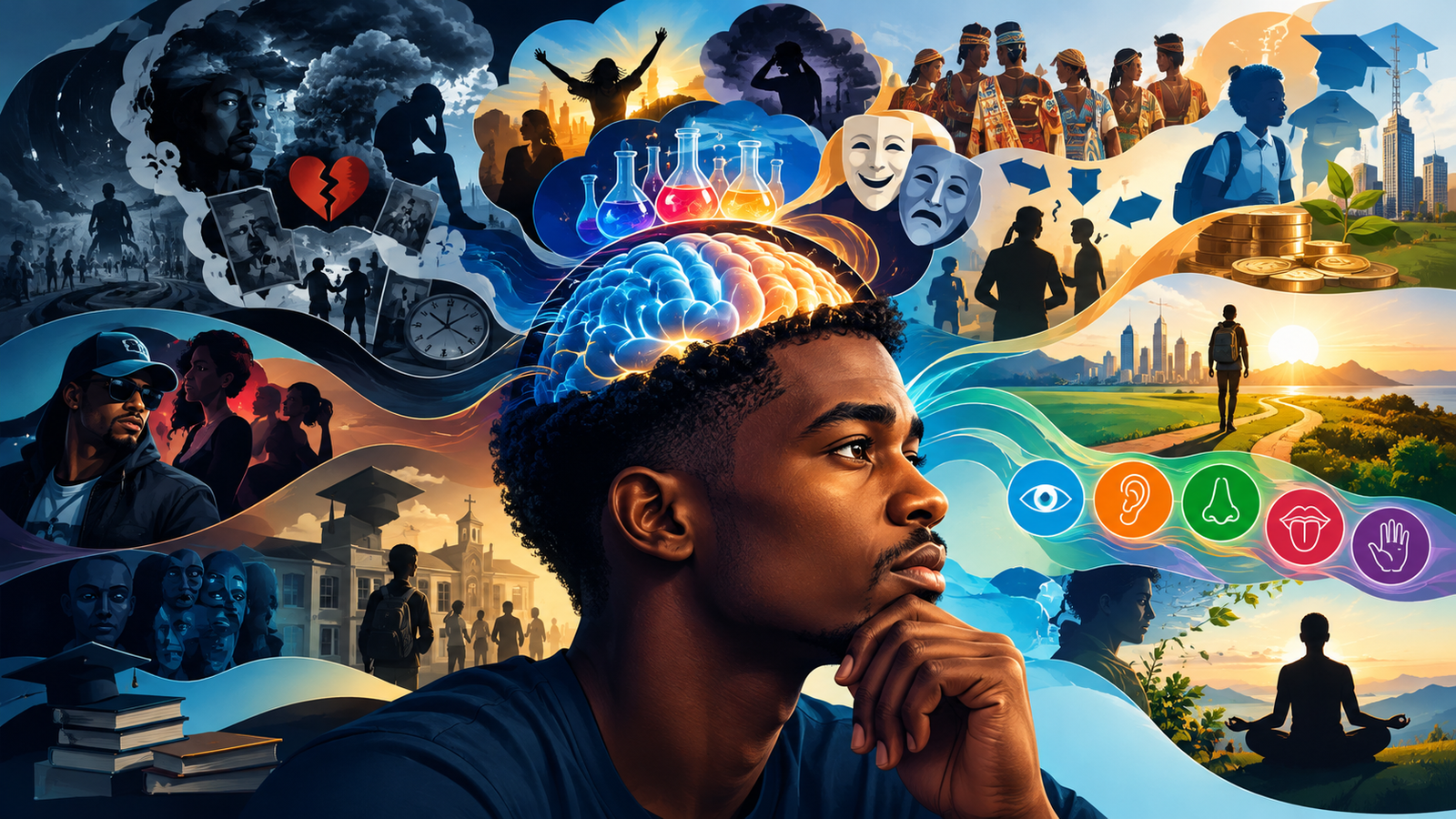
The mind is a masterful conjurer, a bag of tricks with ability to create a web of illusions and deceptions. It’s easy to get caught up in this magic, to become so absorbed that you forget you are not the mind itself.
The mind relies on past information to make deductions, conclusions, and judgments, but the past is just that – past. It’s a relic of a bygone era, a memory that no longer holds relevance in the present moment.
In the waking world, the mind tends to wander, to daydream and create more disordered states than ordered ones. It’s like a restless traveler, constantly seeking new destinations and experiences, but never staying in one place for too long. This tendency towards disorder, increases with time, until eventually, the mind’s creations begin to decay and disintegrate.
The mind is both a blessing and a curse. It creates, imagines, dreams, but also becomes lost in its own illusions.
It’s a delicate balance, one that requires being mindful of your thoughts and emotions, to recognize when you are getting caught up in the mind’s tricks and to gently pull yourself back to the present moment.
On False Conviction:
Have you found yourself completely convinced of something, only to later discover that your conviction was based on false assumptions?
The truth is, the mind is capable of playing tricks, and one of the most common tricks is the experience of emotions. Take, for example, the feeling of hunger. When you wake up in the morning with a growling stomach, and feel like you’re starving. Is it a real feeling of hunger or a trick of the mind?
The mind can take a simple physical sensation like hunger and turn it into a full-blown panic, convincing you that you’re on the verge of starvation and that your health is at risk if you don’t eat immediately. But what’s really happening here is that the mind is using past experiences and interactions to create a narrative that’s not necessarily based in reality.
A Laboratory Where Emotions Are Brewed:
Picture the mind as a naturally-endowed, and mysterious laboratory complex, where different substances are mixed and brewed to create the potions that shape emotions and experiences, which then influence the body’s physiology. In this laboratory, emotions are not facts or truth, but rather a product of belief shaped by the stories you tell yourself about the world.
Someone who has had a traumatic experience may create an emotional potion of fear and anxiety, while someone who has had a positive experience may create an emotional potion of joy and happiness.
Comparison:
The ego has a sneaky way of comparing itself to others. You look around at childhood friends or classmates and evaluate your own success based on their achievements. But this comparison game can be a recipe for disaster.
When we find yourself lagging behind in wealth accumulation or other areas, frustration takes over, you become impatient and resigned. It’s a way for the ego to keep in a state of dissatisfaction and discontentment, always striving for more and never feeling like enough was enough.
Cognitive Dissonance Response:
Cognitive dissonance is a psychological phenomenon that occurs when deeply held beliefs are challenged by new information, when thoughts, feelings, and behaviors come into conflict with one another.
It’s the feeling of discomfort or unease that arises when the understanding of the world is shaken by a new revelation. The human mind is wired to resist change, and this rigidity is often fueled by an intolerance to new information.
When confronted with novel ideas or perspectives, the natural impulse is to deny or dismiss them, rather than embracing them as opportunities for learning.
A Neurobiological Perspective:
According to scientific research, dissonance is triggered by a variety of factors, including repressed emotions, conflicting values, and inconsistent behaviors.
One of the key mechanisms underlying cognitive dissonance is the ‘reenergization’ of the unconscious thoughts and feelings that lie beneath our conscious awareness. When you encounter a stimulus that triggers dissonance, the brain’s unconscious processing centers are activated, releasing a surge of hormonal activity that detected by the internal sense of self.
This ‘ego’, as it is known, the internal monitor and regulator, interprets the dissonance as a threat to the relative peace of mind, triggering a range of defensive mechanisms to restore balance and equilibrium.
The hormonal high that accompanies cognitive dissonance is a critical component of this response. When the brain detects the dissonance, it releases a cocktail of stress hormones, including cortisol and adrenaline, which prepare our body for the “fight or flight” response.
This physiological response is designed to help you respond to threats and challenges, but in the context of cognitive dissonance, it serves to reinforce existing biases and attitudes.
As the dissonance persists, the brain’s attempt to resolve the conflict lead to a range of cognitive and emotional distortions, including rationalization, denial, and projection. These distortions help to reduce the discomfort and anxiety associated with the dissonance, but they also tend to carry forward the underlying conflict, making it more difficult to resolve in the long term.
When you deny or distort new information, you temporarily alleviate the discomfort of cognitive dissonance, but in doing so, you limit your ability to evolve.
Imagine growing up with a certain set of beliefs, only to discover that they’re not entirely true. For instance, a Christian upbringing that taught me to see Lucifer as the embodiment of evil. But as I learned on, I began to realize that the concept of good and evil is far more complex than I had initially thought. The experience of cognitive dissonance is like being on a ship that’s been sailing smoothly, only to hit rough waters. It’s disorienting and unsettling.
In poverty-stricken communities, the struggle for survival is a daily reality. The pursuit of wealth, the need to procreate, and the burden of providing for one’s family can be overwhelming. It’s no wonder that the concept of good and evil is often reduced to simple dual terms. But during life, we realize that the world is not always black and white. Cognitive dissonance is the uncomfortable feeling that arises when we’re forced to confront the multiple shades of gray areas in between.
Senses:
Senses are like antennae, attuned to the electromagnetic signals of the world around you.
You can sense the anger of someone who is about to make a disastrous decision, despite your well-intentioned advice. You can feel the ‘weight’ of their emotions, like a real palpable force that reverberates through the air.
By paying attention to the poise, words, and mental state of those around you, you can intuitively sense the trajectory of their emotionally fueled reactions and ‘see’ the negative thoughts that simmer beneath the surface, like a slow-burning fire that threatens to consume them.
The senses are the messengers conveying information to those around you and to the world at large. The ears tap into the rhythm of sound, the eyes judge the colors and patterns that dance before you. The skin senses the gentle touch of a loved one, or the rough caress of a stranger. The nose sniffs out the invisible scents that waft on the breeze, carrying the essence of a thousand secrets. And the mouth tastes the sweetness of life, savoring the flavors that nature has packed into every moment.
When something stimulates you, your sense of self is triggered into a reaction. This reaction is often driven by past experiences, memories, and reflections that are stored in the mind. These memories can be revisited and re-interpreted in the present moment, influencing your mood and emotional state. Imagine walking into a room that smells like your childhood home. The scent can trigger a flood of memories and emotions, transporting you back to a different time and place.
A person who has had a traumatic experience in the past may have a strong felt sense response to a particular sound or smell that triggers a memory of that event which can affect their mood and emotional state, even if they’re not consciously aware of it.
Cultural Conditioning:
Cultural conditioning shapes our thoughts, emotions, and behaviors beginning from a tender age. It’s the culmination of parental training, social norms, and interpersonal skills that we learn through our interactions with others. Before we reach adulthood, we’re often conditioned to conform to certain norms and behaviors, without fully realizing the implications of these.
One of the most significant ways that cultural conditioning affects you is through the rituals and practices that you’re taught from a young age. Cultural rituals like circumcision evoke intense emotional feelings and create a sense of belonging to a particular group or community. These rituals often have deep roots in history and have been passed down through generations, reinforcing certain behaviors and attitudes in the ‘psyche.’
Cultural conditioning can also be seen as a form of acquired conditioning, where you learn to stick to certain mannerisms and behaviors that you’ve been taught or observed. This can be both positive and negative, as it shapes values, attitudes, and behaviors in ways that are either beneficial or limiting. Being “cultured” often means adhering to certain norms and expectations, even if they don’t necessarily align with yours.
However, as we transition into adulthood, we often lose touch with the creative and playful aspects of our childhood. We’re encouraged to take on more serious and conventional roles, pursuing a ‘beaten’ paths or in ‘definitively safe’ footsteps.
Education And Educio:
The concept of education is deeply rooted in the Latin word “educio,” which means to develop oneself from within and then draw out. This definition suggests that education is not just about acquiring knowledge from external sources, but also about cultivating the power of the mind from within. It suggests that learning is not just a linear process, but a spiral one, where individuals can revisit and build upon their existing knowledge and experiences. This approach to education also recognizes that every individual has a unique learning style and pace, and that learning is a lifelong process that requires patience, persistence, and dedication.
Moral Law And Capitalism:
Moral law is a deep system of control that is exercised by the systems of governance that shape this world. One of the dominant ideologies that underpins the global society is capitalism, which is concerned with the acquisition and production of material wealth. Capitalism as a system is driven by the desire to develop and exploit natural resources, transforming them into cities, utilities, and other structures that support urban progression.
At its core, capitalism is a competitive system that pits individuals and organizations against each other in a relentless pursuit of wealth and status. This competition creates a societal culture that is characterized by a high-power distance, where status is dictated by the amount of wealth and material possessions one has accumulated. The pursuit of wealth and status becomes an all-consuming goal, driving individuals to engage in a never-ending cycle of production and consumption.
One of the key features of capitalism is the concept of ‘primitive accumulation’, which refers to the process of accumulating wealth and resources through the exploitation of natural resources and the labor. This exploitation can take many forms, including the displacement of indigenous communities, the destruction of natural habitats, and the exploitation of workers.
According to Karl Marx, the pursuit of primitive accumulation is a driving force behind the competitive nature of capitalism. Individuals and organizations are constantly seeking to accumulate more wealth and power, often at the expense of others. This creates a societal culture that is characterized by a high level of competition, inequality, and social unrest.
Growing up in poor can be a traumatic experience, leaving you etched with a lasting sense of insecurity and uncertainty. As a result, you may become overly attached to the few possessions you have, and develop a strong desire to acquire more. This attachment can manifest in various ways, such as keeping out-of-date machines or old clothes, or stacking up suitcases in high rows to create the illusion of wealth. You may also go to great lengths to present a façade of prosperity to visitors, serving them special dishes and treating them with special camaraderie, all in an effort to make them believe that the grass is indeed greener on your side even when it is actually wilted.
Adulting:
Adulting, in its essence, is the transformative process of shedding the skin of your childish ways and embracing a more mature, self-assured, and responsible version of self.
It’s a journey of introspection, where you confront your deepest insecurities, biases, and limitations, and strive to overcome them. During this, you develop an unwavering confidence in your abilities, and understand own strengths and weaknesses, learn to distinguish between impulsive desires and rational thoughts, allowing reason to guide decisions and actions.
You learn to recognize the subtle nuances of human behavior, and to respond in a way that is thoughtful, considerate, and respectful. Actions become more deliberate, more calculated, and more mindful of their impact on others. You begin to see that your decisions have consequences, not just for self, but for those around you. You acknowledge the role you play in shaping destinies.
You learn to express yourself in ways that are respectful, considerate, and effective. One aspect of this is verbal communication – the words you speak. However, it’s equally important to pay attention to non-verbal communication, which involves using body language to convey a message. This means being mindful of posture, facial expressions, and tone of voice.
This newfound self-awareness empowers you to make choices that align with logic, rather than being driven by whims or emotions.
The quintessential “fuckboy”:
The quintessential “fuckboy” – a man who lives life on his own terms, prioritizing short-term thrills over long-term commitments. He’s often financially unstable, and his doubts about his ability to provide for a family are palpable. This lack of stability and security is reflected in his relationships, where he flies from one partner to another, leaving a trail of ‘broken hearts’ and shattered dreams in his wake.
These men use their charm and charisma to seduce and deceive. Like chameleons, they are able to change their personalities to suit the situation, hiding their true selves beneath a veneer of confidence and charm. But once they’ve achieved their goal – whether it’s getting laid or securing a partner – they quickly revert to their true selves, revealing a lack of emotional depth and maturity.
This behavior is often perpetuated by a patriarchal culture that celebrates promiscuity and machismo, a culture that perpetuates the myth that “poor people breed a lot,” implying that those who are financially insecure are somehow less capable of controlling their impulses.
The children are left to grow up without the guidance and support of a responsible father figure. In many cases, Black boys are raised by single mothers who have been left to pick up the pieces of a broken relationship. These mothers often instill in their sons a sense of mistrust and resentment towards their absent fathers, perpetuating a cycle of anger and hurt that’s quite difficult to break.
As a young Black man, I recall the moment when the veil of adolescence lifted, and the harsh realities of adulthood stared me straight in the face. It was as if I had been sleepwalking through life, following the script prewritten by others, without ever stopping to ask myself what I truly wanted. School, in particular, had been a refuge, a place where I could excel academically, but not necessarily experientially. I would often skip classes, not because I was lazy, but because I was bored with the monotony of it all. The process of learning had become a mere ritual, a series of empty gestures – facing the teacher, writing notes, cramming for exams, and regurgitating information onto a piece of paper, only to forget it all afterwards.
But it wasn’t just school that felt empty. Even my experiences in church, where I had been baptized and “born again,” felt like just another set of rituals to be performed. I went through the motions, but I didn’t truly understand the significance of it all. It wasn’t until I began to question the status quo, to seek out my own opinions and desires, that I realized I had been living someone else’s dream. I had been drowning in a sea of opinions, expectations, and assumptions, without ever stopping to consider what I truly wanted for self.
In this crisis of identity, the traditional markers of adulthood – graduation, baptism, marriage, and career – were not the only measures of success. I had to measure out my own path, my own sense of purpose, and my own definition of what it meant to be. It was a difficult and painful process, but it was also liberating.
Out from the confines of formal education, I was struck by the realization that the world was full of possibilities, and the choices were endless. I was a young man with a blank canvas, eager to make my mark on the world. But with so many options available, I found myself at a crossroads, torn between the comfort of convention and the thrill of creativity. Should I follow the traditional path to be a family man, with all the security and stability that came with it? Or should I take a leap of faith and pursue my passion for art, even if it meant uncertainty and risk?
As I grappled with this decision, I began to realize that the choices I made would not only shape my career, but also define who I was as a person. I was no longer content to simply follow the crowd and conform to societal expectations. I wanted to forge my own path, to create a life that was authentic and meaningful. And so, I embarked on a journey of self-discovery, one that would take me down a winding road of trial and error, but ultimately lead me to a place of greater understanding and purpose.
It was during this time that I discovered the power of experiential learning. I realized that knowledge was not just something that could be acquired through instruction, but through practice and experience. By immersing myself in the world around me, I was able to learn in ways that I never could have in a classroom. And as I applied this newfound knowledge to my life, I began to notice a transformation taking place. I was no longer just a young man with a dream; I was a person with a purpose, a person who was living a life that was true to who I was.
In the next article, we shall take a dive in what the Ego is and the legacy of colonialism.











One Response
Ego can be constructive as well as destructive. The balance is key…
Peace